Distributed Energy Generation Market Overview:
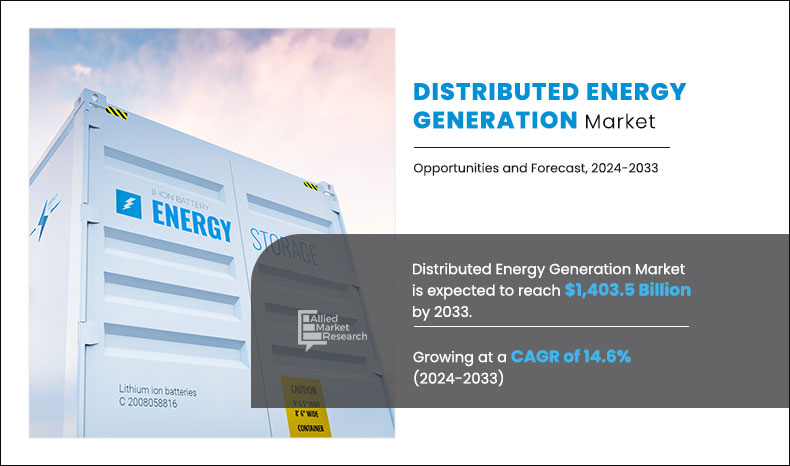
The global distributed energy generation market size was valued at USD 360.4 billion in 2023 and is projected to reach USD 1,403.5 billion by 2033, growing at a CAGR of 14.6% from 2024 to 2033. The surge in demand for reliable and decentralized energy solutions, coupled with growing environmental concerns and ambitious renewable energy targets, is driving the demand for distributed energy generation systems. These innovative systems offer a unique combination of energy security, grid independence, and the ability to integrate multiple renewable sources, making them suitable for a wide range of applications such as rural electrification and industrial energy supply. Additionally, advancements in smart grid technologies and energy storage solutions enhance the efficiency and reliability of distributed generation, further propelling their adoption across various sectors in the energy market.
Key Market Trends & Insights
- The solar PV segment is expected to record the highest revenue CAGR of around 17.6% during the forecast period.
- By application, the commercial segment is expected to dominate the market during the forecast period.
- Asia-Pacific leads the market, driven by rapid economic development, urbanization, and a rising demand for energy.
Market Size & Forecast
- 2023 Market Size: USD 360.4 billion
- 2033 Projected Market Size: USD 1,403.5 billion
- Compound Annual Growth Rate (CAGR) (2024-2033): 14.6%
Introduction
Distributed energy generation (DEG) systems are installed close to the point of consumption rather than at large, centralized power plants. They commonly include technologies such as solar photovoltaic systems and small-scale combustion turbines that generate electricity locally. DEG can supply power to a single building—such as a residence or commercial facility—or operate within a microgrid serving larger sites like industrial complexes, military bases, or university campuses.
By producing electricity near end users, distributed generation enhances energy efficiency and reliability. When connected to a utility’s lower-voltage distribution network, these systems help reduce transmission and distribution losses associated with long-distance power delivery. In addition, DEG supports the integration of clean energy resources, improves grid resilience, and provides greater flexibility in managing local energy demand, ultimately contributing to a more reliable and sustainable power infrastructure.
Distributed energy generation (DEG) systems are widely used across residential, commercial, and industrial sectors. In residential settings, rooftop solar panels and small wind turbines provide on-site electricity and reduce utility costs. Commercial buildings use DEG for peak load management, backup power, and sustainability goals. Industrial facilities deploy combined heat and power (CHP) systems to improve efficiency and lower operational expenses. DEG also supports rural electrification and remote communities with limited grid access. Additionally, microgrids in hospitals, military bases, and university campuses enhance energy security and reliability, ensuring continuous power supply during grid outages or emergencies.
Moreover, ongoing advancements in smart grid technologies and energy storage solutions are improving system efficiency, stability, and performance. Enhanced monitoring, real-time optimization, and better load management capabilities enable distributed generation assets to operate more effectively and reliably. As a result, organizations and communities are increasingly investing in these solutions to strengthen resilience, reduce carbon emissions, and manage long-term energy costs. Collectively, these factors are driving broader adoption of distributed energy generation across residential, commercial, and industrial segments of the energy market.
Key Takeaways
The distributed energy generation market share has been analyzed in terms of value ($billion). The analysis in the report is provided on the basis of technology, end-use industry, and region.
The distributed energy generation market report includes a detailed study covering underlying factors influencing the industry opportunities and trends.
The key players in the distributed energy generation market analysis are Siemens, General Electric, Mitsubishi Electric Corporation, Schneider Electric, Caterpillar Power Plants, Doosan Corporation, Vestas Wind Systems A/S, Rolls-Royce Power Systems AG, Toyota Turbine and Systems Inc., and Capstone Turbine Corporation.
The report facilitates strategy planning and industry dynamics to enhance decision-making for existing market players and new entrants entering the perovskite solar cells industry.
The Asia-Pacific region holds a significant share of the distributed energy generation market growth.
Key Market Dynamics
Drivers
The distributed energy generation (DEG) market is driven by rising demand for reliable and decentralized power, increasing electricity costs, and growing concerns over energy security. Government incentives, renewable energy targets, and carbon reduction policies are accelerating adoption. Technological advancements in solar PV, wind systems, battery storage, and smart grid infrastructure further enhance system efficiency and affordability, encouraging investment across residential, commercial, and industrial sectors.
Restraints
High initial capital costs and complex installation processes can limit widespread adoption, particularly in developing regions. Regulatory uncertainties, inconsistent policy frameworks, and challenges related to grid integration may also hinder market growth. Additionally, intermittency issues associated with renewable energy sources require advanced storage or backup solutions, thereby increasing overall system costs.
Opportunities
Expanding rural electrification projects, growth in microgrid development, and rising demand for energy resilience present significant opportunities. Advancements in energy storage, digital energy management, and virtual power plants create new revenue streams. Increasing corporate sustainability commitments and the emergence of prosumers further open avenues for innovation and long-term expansion in the distributed energy generation market.
Segments Overview
The distributed energy generation market forecast is segmented on the basis of technology, end-use industry, and region. By technology, the market is classified into micro-turbines, combustion turbines, micro-hydropower, reciprocating engines, fuel cells, wind turbines, solar PV, and others. By end-use industry, the market is classified into residential, commercial, and industrial. On the basis of region, the market is studied across North America, Europe, Asia-Pacific, and LAMEA. Presently, Asia-Pacific accounts for the largest share of the market, followed by LAMEA and Europe.
By Technology
On the basis of technology, Fuel cells dominate the distributed energy generation market due to their high efficiency, reliability, and environmental benefits. Unlike traditional combustion-based power generation, fuel cells convert chemical energy directly into electrical energy through an electrochemical process, resulting in higher efficiency and lower emissions. They utilize various fuels, including hydrogen, natural gas, and biogas, making them versatile for different applications. Fuel cells also offer scalable solutions, from small residential units to large industrial systems, providing flexibility in power generation. Their ability to provide consistent and uninterrupted power makes them ideal for critical infrastructure and remote locations where reliability is paramount. Additionally, advancements in fuel cell technology have reduced costs and improved performance, further driving their adoption. As concerns over environmental sustainability and energy security grow, fuel cells present a promising solution, aligning with global efforts to reduce carbon footprints and enhance distributed energy generation systems.
By Technology
Solar PV is projected as the most lucrative segment.
By End Use Industry
The industrial segment dominates the distributed energy generation market due to its high and continuous energy demand, which requires reliable and cost-effective power solutions. Industries such as manufacturing, mining, and petrochemicals often operate around the clock and cannot afford power interruptions. Distributed energy generation systems, including combined heat and power (CHP) and renewable energy installations, provide these industries with a stable and efficient energy supply, reducing dependence on the central grid and mitigating the risks associated with grid outages. Additionally, the ability to generate energy on-site helps industries lower energy costs and enhance operational efficiency. The growing emphasis on sustainability and reducing carbon footprints also drives industries to adopt distributed energy solutions, integrating renewable energy sources like solar and wind to meet environmental regulations and corporate social responsibility goals. Thus, the industrial segment’s need for reliable, economical, and sustainable energy significantly propels its dominance in the distributed energy generation market.
By End-use Industry
Commercial is projected as the most lucrative segment.
By Region
The Asia-Pacific region dominates the distributed energy generation market due to its rapid economic growth, urbanization, and increasing energy demand. Countries like China, India, and Japan are at the forefront of adopting distributed energy solutions to address their expanding energy needs and reduce dependence on centralized power grids. The region's strong governmental support and favorable policies for renewable energy adoption, coupled with significant investments in smart grid technologies, further drive market growth. Additionally, the abundance of renewable resources such as solar, wind, and biomass in the Asia-Pacific region enhances the feasibility and attractiveness of distributed energy generation. The focus on reducing greenhouse gas emissions and improving energy access in rural and remote areas also propels the deployment of distributed energy systems. Overall, the combination of economic incentives, supportive regulatory frameworks, and abundant natural resources positions Asia-Pacific as a leader in the distributed energy generation market.
By Region
Asia-Pacific is projected as the most lucrative segment.
Which Segment dominates the Distributed Energy Generation Market?
Fuel cells lead the distributed energy generation market due to their high efficiency, reliability, and environmental advantages. Unlike conventional combustion-based systems, fuel cells convert chemical energy directly into electricity through an electrochemical process, achieving higher efficiency with lower emissions. They are compatible with various fuels, including hydrogen, natural gas, and biogas, making them versatile for diverse applications. Fuel cells are scalable, ranging from small residential units to large industrial installations, offering flexibility in power generation. Their ability to deliver consistent, uninterrupted power makes them ideal for critical infrastructure and remote locations where reliability is essential. Ongoing technological advancements have further improved performance and reduced costs, driving wider adoption. With growing emphasis on sustainability and energy security, fuel cells provide a clean, efficient, and dependable solution, supporting global efforts to reduce carbon footprints and strengthen distributed energy generation systems.
How Do Different Technologies Compare in Performance?
Different distributed energy generation technologies vary in efficiency, reliability, and suitability for specific applications. Solar photovoltaic (PV) systems offer high scalability and low operational costs but depend on sunlight availability, making energy storage essential for continuous supply. Wind turbines can generate significant power in high-wind regions but are site-dependent and subject to intermittency. Microturbines provide reliable, dispatchable power but typically have higher fuel costs and emissions compared with renewables. Integrating these technologies with energy storage and smart grid solutions enhances overall performance by balancing supply and demand, improving grid stability, and maximizing renewable utilization. Choosing the right technology depends on resource availability, load requirements, and economic considerations.
Who Are the Primary End Users Driving Market Adoption?
The primary end users driving distributed energy generation (DEG) adoption include residential, commercial, and industrial sectors. Residential consumers use rooftop solar and small-scale storage to reduce utility bills and enhance energy independence. Commercial buildings adopt DEG for peak load management, sustainability goals, and backup power. Industrial facilities deploy combined heat and power (CHP) systems and microgrids to improve efficiency and ensure uninterrupted operations. Additionally, institutions such as hospitals, universities, and military bases rely on distributed generation for energy security and resilience. Growing participation from prosumers, i.e., consumers who both generate and use energy, is also expanding market adoption.
What Makes the U.S./Europe/Asia-Pacific a Key Market for Industry Players?
The U.S. is a key market due to strong government incentives, state-level renewable energy mandates, and widespread adoption of distributed energy technologies. High electricity costs and growing concerns over grid reliability drive residential, commercial, and industrial investment in solar, wind, and energy storage solutions. Advanced smart grid infrastructure and R&D initiatives further support market growth, while the rise of prosumers enhances decentralized energy adoption.
Europe’s leadership stems from ambitious decarbonization goals, strict greenhouse gas reduction policies, and extensive subsidies for renewable energy projects. Countries such as Germany, France, and the UK have advanced microgrid and solar PV deployment, supported by well-established regulatory frameworks. Strong consumer awareness and corporate sustainability commitments drive demand for clean, efficient, and reliable distributed energy systems.
Asia–Pacific dominates global growth due to rapid urbanization, industrialization, and rise in electricity demand. China, Japan, India, and Australia are heavily investing in solar, wind, and microgrid technologies. Supportive government policies, falling technology costs, and grid modernization initiatives position the region as a hub for distributed energy innovation and large-scale deployment, attracting major industry players.
How is Artificial Intelligence Transforming This Market?
Artificial intelligence (AI) is transforming the distributed energy generation (DEG) market by optimizing energy production, consumption, and grid management. AI-driven forecasting tools analyze weather patterns, historical demand, and renewable output to predict energy generation and load requirements accurately, enabling efficient scheduling of solar, wind, and storage systems. Smart energy management platforms use AI to automate demand response, balance supply and demand in real time, and reduce energy waste. Predictive analytics monitor asset performance, detect anomalies, and schedule maintenance proactively, minimizing downtime and operational costs.
AI also empowers prosumers and microgrid operators to optimize self-consumption, trade excess energy, and integrate multiple renewable sources seamlessly. By enhancing operational efficiency, reducing costs, and improving reliability, AI accelerates the adoption of distributed generation technologies, strengthens grid resilience, and supports the broader transition toward sustainable, decentralized energy systems.
How Are Consumer Preferences Shaping Market Trends?
Consumer preferences are increasingly shaping the distributed energy generation (DEG) market by driving demand for clean, reliable, and cost-effective energy solutions. Residential and commercial users are prioritizing renewable sources like solar and wind to reduce electricity bills, lower carbon footprints, and achieve energy independence. The rise of prosumers is encouraging adoption of rooftop solar, small-scale storage, and smart energy management systems.
Consumers also value reliability and resilience, leading to greater interest in microgrids and backup power solutions that ensure uninterrupted electricity supply during outages. Digital platforms that enable real-time monitoring, optimization, and energy trading are further influencing buying decisions. Sustainability-conscious organizations are integrating DEG to meet environmental goals and enhance corporate social responsibility. Collectively, these evolving preferences are driving innovation, expanding applications, and shaping growth patterns in the global distributed energy generation market.
Key Distributed Energy Generation Companies:
Key players in the distributed energy generation industry include
Siemens
General Electric
Mitsubishi Electric Corporation
Schneider Electric
Caterpillar Power Plants
Doosan Corporation
Vestas Wind Systems A/S
Rolls-Royce Power Systems AG
Toyota Turbine
Systems Inc.
Capstone Turbine Corporation.
In the distributed energy generation market trends, companies have adopted agreements, product development, and innovation to expand the market or develop new products. For instance, in January 2024, Caterpillar successfully tested hydrogen fuel cells at the Microsoft data center. The company says the demonstration provided insights into the capabilities of fuel cell systems to power multi-megawatt data centers, ensuring uninterrupted power supply to meet 99.999% uptime requirements. Furthermore, in December 2023, Doosan Corp. announced the development of hydrogen polymer electrolyte membrane fuel cell (H2-PEMFC) systems for buildings and homes, with capacities of 1kW and 10kW. The H2-PEMFC systems directly utilize hydrogen fuel, unlike conventional systems that rely on natural gas reformation. Moreover, in March 2023, Vestas secured a 50 MW order in Germany for a wind project that is expected to provide energy for green hydrogen production from Energiepark Bad Launchstadt GmbH.
Recent Advancements
In July 2024, Siemens AG introduced a new microgrid management system that uses AI and machine learning to better integrate distributed energy resources with central grids, improving real‑time control and resilience.
In early 2025, General Electric announced a 1.2 GW distributed renewable project portfolio across North America to support critical infrastructure with hybrid solar, wind, and storage solutions.
In November 202, Schneider Electric launched AI‑driven energy management platforms (EcoStruxure DERMS 2.0) that optimize grid operations and improve energy efficiency for utility and commercial customers.
How Intense is Market Competition and What Defines Competitive Advantage?
Market competition in distributed energy generation (DEG) is highly intense, driven by numerous global players offering diverse technologies such as solar PV, wind, fuel cells, and energy storage systems. Companies compete on factors including technology innovation, cost efficiency, scalability, reliability, and integration with smart grids and microgrids. Early adoption of AI-driven energy management, advanced storage solutions, and modular systems provides a clear competitive edge. Regulatory compliance, strong project pipelines, and strategic partnerships with utilities, industrial clients, and governments also define market advantage. Firms that can combine generation, storage, and digital optimization, while maintaining lower lifecycle costs and high system reliability, are better positioned to capture market share in an increasingly crowded and technology-driven industry.
What is the Long-Term Outlook for the Market?
The long-term outlook for the distributed energy generation (DEG) market is highly positive, driven by the global shift toward decentralized, sustainable, and resilient energy systems. Rising electricity demand, coupled with growing concerns over climate change and energy security, is prompting governments, businesses, and consumers to adopt renewable and distributed energy solutions. Technological advancements in solar, wind, fuel cells, microgrids, and energy storage are enhancing efficiency, reducing costs, and expanding deployment across residential, commercial, and industrial sectors.
The integration of AI, automation, and smart energy management platforms will continue to optimize generation, storage, and consumption, improving reliability and grid flexibility. Policy support, carbon reduction mandates, and incentives for clean energy adoption further bolster market growth. Over the next decade, DEG is expected to play a central role in achieving carbon-neutral energy systems, enabling prosumer participation, and transforming the traditional centralized electricity model into a more resilient and distributed network.
Key Benefits of Stakeholders
This report provides a quantitative analysis of the market segments, current trends, estimations, and dynamics of the distributed energy generation market analysis from 2023 to 2033 to identify the prevailing distributed energy generation market opportunities.
Market research is offered along with information related to key drivers, restraints, and opportunities.
Porter's five forces analysis highlights the potency of buyers and suppliers to enable stakeholders to make profit-oriented business decisions and strengthen their supplier-buyer network.
In-depth analysis of the distributed energy generation market statistics and segmentation assists in determining the prevailing market opportunities.
Market player positioning facilitates benchmarking and provides a clear understanding of the present position of the market players.
The report includes an analysis of the distributed energy generation market trends, key players, market segments, application areas, and market growth strategies.
Distributed Energy Generation Market Report Highlights
| Aspects | Details |
 By TECHNOLOGY |
|
 By END USE INDUSTRIES |
|
 By Region |
|
 Key Market Players | Caterpillar Power Plants, Toyota Turbine and Systems Inc., Rolls-Royce Power Systems AG, Doosan Corporation, Capstone Turbine Corporation., General Electric, Schneider Electric, Mitsubishi Electric Corporation, Siemens, Vestas Wind Systems A/S |
Analyst Review
According to the analyst, the global distributed energy generation market is anticipated to witness growth during the forecast period, driven by increased environmental awareness and stringent government policies on reduction in emission of greenhouse gases.
The deployment of DEG technologies has increased since 2014 owing to the adoption of supportive government policies, such as Production Tax Credit (PTC) that provides a per-kilowatt-hour tax credit for the electricity generated by DEG resource and Investment Tax Credit (ITC) that allows the tax credit to be taken based on the amount invested instead of the electricity produced. Several states and local governments are advancing policies to encourage greater deployment of renewable technologies due to their benefits, including energy security, resiliency, and emissions reductions.
However, high installation cost and negative environmental effect can have a restraining effect on the growth of the market. Distributed energy generation technologies that involve burning fossil fuels—can produce many types of impacts as larger fossil-fuel-fired power plants, such as air pollution. Also, hybrid energy systems are defined as the integration of several types of energy generation equipment such as electrical energy generators, electrical energy storage systems, and renewable energy sources. Hybrid energy systems may be utilized in grid-connected mode, isolated from grid, and special aims. This is expected to provide growth opportunities for the distributed energy generation market during the forecast period.
Increased environment awareness, government policies, and green house gas emission reduction targets are the key factors boosting the Distributed Energy Generation Market growth.
The global distributed energy generation market size was valued at $360.4 billion in 2023 and is projected to reach $1,403.5 billion by 2033, growing at a CAGR of 14.6% from 2024 to 2033.
Key players in the distributed energy generation market include Siemens, General Electric, Mitsubishi Electric Corporation, Schneider Electric, Caterpillar Power Plants, Doosan Corporation, Vestas Wind Systems A/S, Rolls-Royce Power Systems AG, Toyota Turbine and Systems Inc., and Capstone Turbine Corporation.
Application in hybrid energy systems is the opportunity to the distributed energy generation Market growth.
The distributed energy generation market is segmented on the basis of technology, end-use industry, and region. By technology, the distributed energy generation market is segmented into micro-turbines, combustion turbines, micro-hydropower, reciprocating engines, fuel cells, wind turbines, solar PV, and others. By end-use industry, the market is divided into residential, commercial, and industrial. Region-wise, the market is studied across North America, Europe, Asia-Pacific, and LAMEA.
High installation cost and negative environmental effect at the end hamper the growth of distributed energy generation Market growth.
Commercial is the fasting growing segment on the basis of end use in distributed energy generation Market.
Loading Table Of Content...